




What Suit Construction Details Should You Check Before Buying?
Summary:
A suit can look sharp on a hanger and still disappoint once you put it on. The difference often comes down to construction, not just color or fabric. If you plan to buy classic fit suit styles, checking the shoulders, canvas, seams, lining, buttons and trouser construction can help you choose a garment that fits comfortably and holds its shape through regular wear.
Start Where the Suit Meets Your Body
A well-constructed suit should do more than look good from a distance. It needs to sit properly on your shoulders, move comfortably and keep a clean shape as you walk, sit and reach. That is why construction deserves attention before you think about the color or pattern. Two suits can use similar fabrics and have very different results because of how they are cut and assembled.

For shoppers planning to buy classic fit suit styles, construction becomes even more important. The roomier cut should feel comfortable without appearing shapeless or oversized.
The Shoulder Fit Comes First
The shoulders are one of the hardest parts of a suit to alter, so this is the first area worth checking.
The jacket shoulder should sit close to your natural shoulder line. It should not extend far beyond it or create a noticeable bump where the sleeve begins.
Try the jacket on and let your arms rest naturally. If the shoulder feels restrictive, the jacket may be too small. If the shoulder extends well past your body, sizing down may be worth considering.
A good shoulder fit gives the rest of the jacket a better starting point.
Look Closely at the Lapels
Lapels are not just decorative. They affect the visual shape of the jacket.
A properly made lapel should lie smoothly against the chest and roll naturally toward the collar. It should not look crushed, twisted or uneven.
Common styles include notch, peak and shawl lapels. Notch lapels are common on business and everyday suits, while peak lapels can create a sharper, more formal appearance.
The important thing is clean construction. A lapel should look intentional rather than flat and lifeless.
Check the Jacket's Inner Structure
This is where suit construction gets more interesting.
Traditional tailored jackets may use canvas inside the front panels. A canvas layer helps the jacket develop structure and can allow it to sit more naturally against the body.
You may also encounter fused construction, where the interlining is bonded to the outer fabric. Both approaches can produce wearable suits, but they create different characteristics in feel, drape and construction.
When shopping online, check the product description for information about the jacket's construction. If the details are not listed, do not assume a particular construction method.
Don't Ignore the Lining
The lining sits out of sight, but you notice its effect every time you put the jacket on.
A properly fitted lining should allow the jacket to move without pulling tightly across the back or bunching around the sleeves. It should also sit smoothly inside the jacket rather than twisting into folds.
Check the sleeve lining too. Your arms should move freely when you bend your elbows or reach forward.
This small detail can make a noticeable difference during a long workday or formal event.
Inspect the Seams
Turn your attention to the stitching.
Seams should generally look even and secure. Look along the side seams, armholes, collar and jacket opening for obvious puckering or loose threads.
You do not need to count every stitch. Instead, look for consistency.
Pay special attention to areas that experience regular movement. The armhole and side seams need to handle repeated stress, so careless finishing there can become a problem later.
Buttons Are More Important Than They Look
Suit buttons receive plenty of use.
Check that the buttons sit securely and align properly. Buttonholes should have clean edges and even stitching. The front buttons should also line up naturally when the jacket is closed.
Sleeve buttons deserve attention too. Functional sleeve buttonholes can be a sign of traditional tailoring, although decorative buttons can also be used on quality garments.
Never judge the entire suit from its buttons alone. Think of them as one small part of the larger construction picture.
Examine the Trousers, Too
A suit is not just a jacket.
The trousers need to fit properly through the waist, seat, thigh and leg. Look for a waistband that sits comfortably without digging into your body or sliding down during movement.
The front closure should lie flat. Pockets should not pull open when you stand naturally.
Pay attention to the trouser crease as well. A clean crease can improve the overall shape, especially on classic-fit trousers.
Quick trouser checks
- Waistband sits comfortably
- Seat does not pull tightly
- Pockets remain flat
- Legs fall naturally
- Hem works with your chosen shoes
Small problems become much more noticeable once you start moving.
Fabric and Construction Need to Work Together
A quality fabric does not automatically create a quality suit.
Wool remains a popular suiting fabric because it can offer structure, comfort and a refined appearance. Cotton, linen and blended fabrics can also make sense for specific climates and occasions.
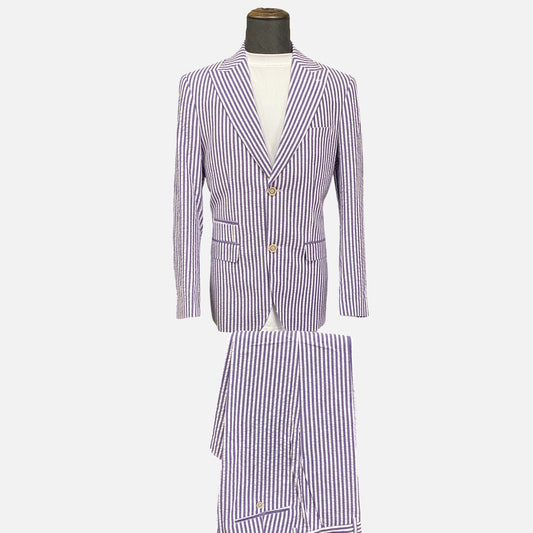
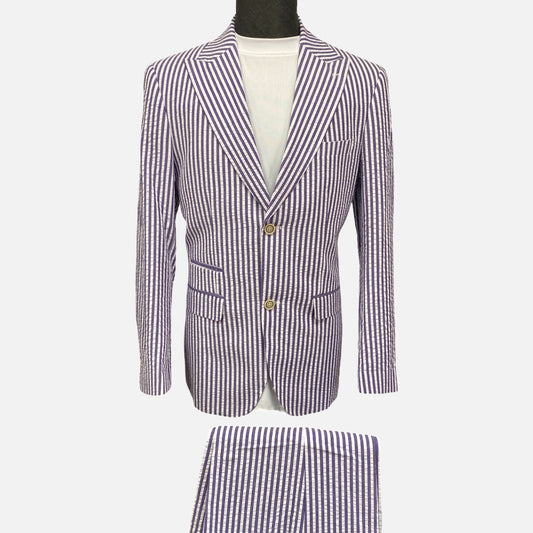
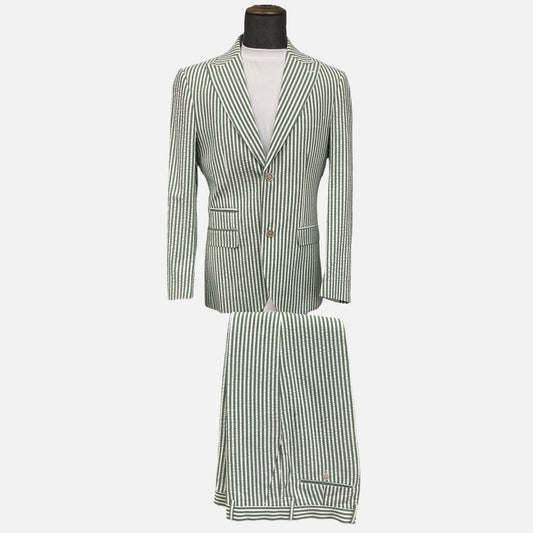
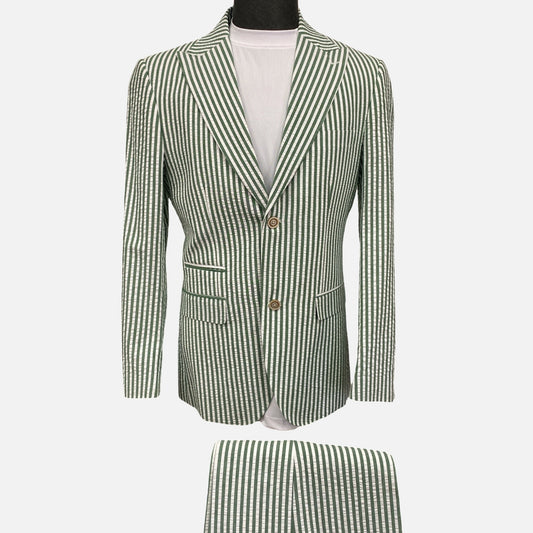
Dolce Vita's suit collection currently includes different fabrics and styles, including wool suits, linen pieces and cotton seersucker options. That variety shows why fabric choice should depend on how and where you plan to wear the suit.
A summer suit does not need to feel like a winter suit. Construction should match its purpose.
Check How the Pattern Meets
Pattern matching is another useful clue.
On checked or striped suits, look at areas such as the chest, pockets and front panels. Strong pattern alignment can create a cleaner appearance.
It does not need to be perfect across every part of a complex garment. Still, obvious breaks in a large pattern can make the suit look less refined.
This detail becomes particularly noticeable on the front of the jacket because it is one of the first areas people see.
Classic Fit Still Needs Shape
A classic-fit jacket usually gives more room through the chest and body than a slim cut. That extra space can improve comfort, but the garment should still follow your general shape.
If the jacket hangs like a box, the cut may be too large. If you have excess fabric gathering around the waist, another size or alteration could make a better difference.
The goal is room to move without losing structure.
Check the Jacket Length
Jacket length affects proportion.
A jacket that is too short can make the body look unbalanced. One that is too long can make the entire outfit appear heavy.
A simple visual check is to stand naturally and look at how the jacket sits around your seat and hips. The exact ideal length depends on your height, proportions and the suit's cut.
Online shoppers should pay close attention to the brand's measurements instead of relying only on the size label.
What Should You Check When Buying Online?
Shopping for a suit online requires a slightly different approach. Product descriptions can provide useful clues about fabric, fit and construction. Measurements are particularly important because a “42” from one brand may not fit exactly like a 42 from another.
Before ordering, check:
- Chest measurement
- Waist measurement
- Sleeve length
- Trouser waist
- Inseam
- Fit description
- Fabric composition
- Return and exchange information
This is especially useful when you buy classic fit suit styles online because different brands may interpret classic fit slightly differently.
A Good Suit Should Move Naturally
A suit is clothing, not armor. Sit down. Raise your arms. Reach forward. Walk around. The jacket should remain comfortable during ordinary movement.
Some tension is normal when you move beyond the garment's intended range. Constant pulling across the chest or back is a different matter.
Movement also helps reveal problems that are difficult to spot while standing still.
Eight Quick Questions Before You Buy
Q1. What is the most important construction detail in a suit?
A1. Shoulder construction and fit deserve priority because the shoulders strongly affect the jacket's overall shape and are difficult to alter.
Q2. What does canvas mean in a suit?
A2. Canvas is an internal layer used to give a jacket structure and help it develop a natural shape. Some suits use full canvas, some use half canvas and others use fused construction.
Q3. How should suit lapels sit?
A3. Lapels should lie smoothly against the chest and roll naturally toward the collar. They should not twist, buckle or look uneven.
Q4. Should a classic-fit suit look loose?
A4. No. Classic fit generally provides more room than slim or modern cuts, but the jacket should still maintain a clear shape around the shoulders, chest and body.
Q5. How can I check suit quality online?
A5. Read the fabric composition, fit description and construction information. Also check detailed measurements, product photographs and the store's return terms before ordering.
Q6. What should I check on suit trousers?
A6. Check the waistband, seat, pockets, thigh, leg shape and inseam. The trousers should remain comfortable without excessive pulling or loose fabric.
Q7. Does expensive fabric guarantee a better suit?
A7. No. Fabric is only one part of the garment. Construction, fit, finishing and internal structure all affect the final result.
Q8. Can a classic-fit suit be altered?
A8. Many areas can be adjusted by a tailor, including sleeve length, trouser length and some waist adjustments. Shoulder changes are generally more difficult, so the initial shoulder fit matters greatly.
Buy for Construction, Not Just Appearance
Dolce Vita Fashions believes a good suit should do its job quietly. It should sit right, move easily and make you feel ready before you even think about your clothes. If you want to buy classic fit suit styles, our collection gives you different fabrics, patterns and cuts to explore.
As a Dolce vita suit company, we bring together pieces that can earn their place in your wardrobe, not simply hang there waiting for one big occasion.